UNHCR and Japan sign US$6.9 million partnership to restore access to documentation and legal services for displaced families in Cabo Delgado
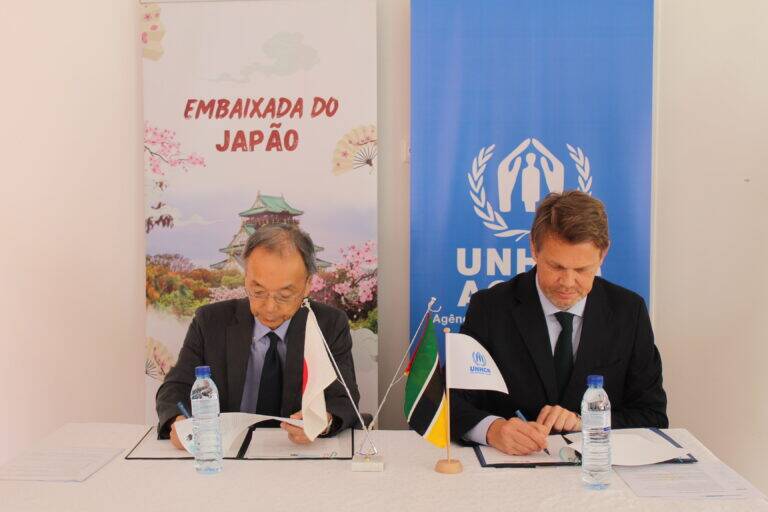
UNHCR and Japan sign US$6.9 million partnership to restore access to documentation and legal services for displaced families in Cabo Delgado
Club of Mozambique, 03 Mar 2026
URL: https://clubofmozambique.com/news/unhcr-and-japan-sign-us6-9-million-partnership-to-restore-access-to-documentation-and-legal-services-for-displaced-families-in-cabo-delgado/
The United Nations High Commissioner for Refugees (UNHCR) and the Government of Japan sign a USD 6.9 million partnership agreement to support access to documentation and legal services for displaced families and conflict-affected communities in Cabo Delgado, northern Mozambique.
Since 2017, communities in Cabo Delgado, northern Mozambique, have been affected by a violent armed conflict perpetuated by non-state armed groups (NSAG) triggering widespread insecurity and leaving hundreds of thousands of people still displaced.
When people are forced to flee, they often lose their personal documents, which in turn cuts off access to health care, education, justice, livelihoods and social assistance. In Cabo Delgado, many displaced and returnee families remain without the civil documentation needed to rebuild their lives, increasing protection risks and deepening vulnerability.
Through this partnership, UNHCR and Japan will support access to the documentation people need to use essential services, while providing legal aid and strengthening the systems that deliver these services in coordination with relevant national authorities. The project focuses on practical solutions that bring services closer to communities and help reduce barriers faced by displaced families.
From 2026 to 2028, the project will support the rehabilitation or reconstruction of 27 government service points and strengthen the capacity of 300 provincial and district officials responsible for civil registration, identification, and legal assistance, contributing to more accessible and sustainable service delivery. Through mobile documentation and legal aid services, the project also aims to facilitate access to civil documentation for approximately 100,000 people, provide legal assistance to around 30,000 individuals, and reach 120,000 people through information and awareness activities in hard-to-reach areas of Cabo Delgado.
“For displaced families, the absence of documentation can affect many aspects of daily life and often determines whether people can work legally or seek justice. Without documentation, many cannot even register a phone number or use basic payment systems, placing livelihood opportunities beyond their reach. By restoring legal identity, this partnership helps people move freely and safely, access services and livelihoods, and reduce their dependence on humanitarian assistance. It is therefore not only about protection, but also about enabling self-reliance and supporting durable solutions for displaced families and the communities hosting them,” said Xavier Creach, UNHCR Representative in Mozambique.
Japan’s contribution reflects its commitment to human security and to supporting people affected by complex crises through practical, people-centred assistance.
“Japan aims to contribute to the sustainable stabilization of Cabo Delgado Province through the strengthening of public institutions, support for reconstruction, and assistance to affected populations. By supporting access to civil documentation, legal services, and administrative capacity-building, this project directly contributes to social reintegration, inclusion, and the establishment of solid foundations for local governance,” said H.E. Keiji Hamada, Ambassador of Japan to Mozambique.
As Cabo Delgado continues to face insecurity and protracted displacement, restoring access to civil documentation and justice services remains a critical step toward recovery. By supporting national systems and bringing services closer to affected communities, the project will help families reclaim their legal identity, reduce protection risks and enable access to education, health care and livelihoods. In doing so, the partnership strengthens trust in public institutions, supports durable solutions and contributes to longer-term stability and resilience in northern Mozambique.
Since 2017, communities in Cabo Delgado, northern Mozambique, have been affected by a violent armed conflict perpetuated by non-state armed groups (NSAG) triggering widespread insecurity and leaving hundreds of thousands of people still displaced.
When people are forced to flee, they often lose their personal documents, which in turn cuts off access to health care, education, justice, livelihoods and social assistance. In Cabo Delgado, many displaced and returnee families remain without the civil documentation needed to rebuild their lives, increasing protection risks and deepening vulnerability.
Through this partnership, UNHCR and Japan will support access to the documentation people need to use essential services, while providing legal aid and strengthening the systems that deliver these services in coordination with relevant national authorities. The project focuses on practical solutions that bring services closer to communities and help reduce barriers faced by displaced families.
From 2026 to 2028, the project will support the rehabilitation or reconstruction of 27 government service points and strengthen the capacity of 300 provincial and district officials responsible for civil registration, identification, and legal assistance, contributing to more accessible and sustainable service delivery. Through mobile documentation and legal aid services, the project also aims to facilitate access to civil documentation for approximately 100,000 people, provide legal assistance to around 30,000 individuals, and reach 120,000 people through information and awareness activities in hard-to-reach areas of Cabo Delgado.
“For displaced families, the absence of documentation can affect many aspects of daily life and often determines whether people can work legally or seek justice. Without documentation, many cannot even register a phone number or use basic payment systems, placing livelihood opportunities beyond their reach. By restoring legal identity, this partnership helps people move freely and safely, access services and livelihoods, and reduce their dependence on humanitarian assistance. It is therefore not only about protection, but also about enabling self-reliance and supporting durable solutions for displaced families and the communities hosting them,” said Xavier Creach, UNHCR Representative in Mozambique.
Japan’s contribution reflects its commitment to human security and to supporting people affected by complex crises through practical, people-centred assistance.
“Japan aims to contribute to the sustainable stabilization of Cabo Delgado Province through the strengthening of public institutions, support for reconstruction, and assistance to affected populations. By supporting access to civil documentation, legal services, and administrative capacity-building, this project directly contributes to social reintegration, inclusion, and the establishment of solid foundations for local governance,” said H.E. Keiji Hamada, Ambassador of Japan to Mozambique.
As Cabo Delgado continues to face insecurity and protracted displacement, restoring access to civil documentation and justice services remains a critical step toward recovery. By supporting national systems and bringing services closer to affected communities, the project will help families reclaim their legal identity, reduce protection risks and enable access to education, health care and livelihoods. In doing so, the partnership strengthens trust in public institutions, supports durable solutions and contributes to longer-term stability and resilience in northern Mozambique.