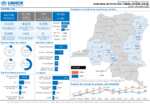
Refugees and Asylum Seekers in the DRC   
Refugees and Asylum Seekers in the Provinces

The boundaries and names shown and the designations used on this map do not imply official endorsement or acceptance by the United Nations

JSON 

Loading Refugees by Origin

["population",{"title_language_ar":"","title_language_en":"Refugees by Origin","title_language_es":"","title_language_fr":"","subtitle_language_ar":"","subtitle_language_en":"","subtitle_language_es":"","subtitle_language_fr":"","order":"","view":"originType","population_group":["1;4","0;5249"],"limit":"","fromDate":"","color":"#3c8dbc","frequency":"day","chartType":"areaspline","async":"1","type":"country","widget_id":659448,"position":"left","locale":"es","title":"Refugees by Origin","subtitle":"","country":{},"geo_id":486,"sv_id":0}]
Internally Displaced Persons in the DRC   
Internally Displaced Persons in the Provinces

The boundaries and names shown and the designations used on this map do not imply official endorsement or acceptance by the United Nations

JSON 
For more informations about IDP data, please click to the following link: IDP factsheet
Documents  

Loading Latest Documents

["documents",{"title_language_ar":"","title_language_en":"Latest Documents","title_language_es":"","title_language_fr":"","subtitle_language_ar":"","subtitle_language_en":"","subtitle_language_es":"","subtitle_language_fr":"","order":"","limit":"10","doc_type":"","groupByCategory":"1","async":"1","type":"country","widget_id":659453,"position":"left","locale":"es","title":"Latest Documents","subtitle":"","country":{},"geo_id":486,"sv_id":0}]
Protection Monitoring in DRC   

Loading All Refugees and Asylum Seekers

["population",{"title_language_ar":"","title_language_en":"All Refugees and Asylum Seekers","title_language_es":"","title_language_fr":"","subtitle_language_ar":"","subtitle_language_en":"","subtitle_language_es":"","subtitle_language_fr":"","order":"","view":"totalPopulationType","population_group":["0;4622","0;4625","0;4626","0;4637","0;4639","0;4649","0;4687","0;4688","0;4732","0;4733","0;4734","0;4735","0;4748","0;4768","0;4769","0;4949","0;4952","0;5069","0;5070","0;5075","0;5249","0;5279","0;5325","0;5328","0;5329","0;5330","0;5331","0;5332","0;5333","0;5334","0;5335","0;5336","0;5337","0;5338","0;5339","0;5340","0;5438","0;5529","0;5530"],"limit":"","fromDate":"","color":"#3c8dbc","frequency":"month","chartType":"spline","async":"1","type":"country","widget_id":659456,"position":"right","locale":"es","title":"All Refugees and Asylum Seekers","subtitle":"","country":{},"geo_id":486,"sv_id":0}]

Loading Refugees breakdown by Age/Gender

["population",{"title_language_ar":"","title_language_en":"Refugees breakdown by Age\/Gender","title_language_es":"","title_language_fr":"","subtitle_language_ar":"","subtitle_language_en":"","subtitle_language_es":"","subtitle_language_fr":"","order":"","view":"demographyChartType","population_group":["0;4622","0;4625","0;4637","0;4639","0;4649","0;4687","0;4688","0;4734","0;4735","0;4748","0;4768","0;4769","0;4949","0;5069","0;5070","0;5075","0;5279","0;5325","0;5326","0;5327","0;5328","0;5329","0;5330","0;5331","0;5332","0;5333","0;5334","0;5335","0;5336","0;5337","0;5338","0;5339"],"households":"1","limit":"","fromDate":"","color":"#3c8dbc","frequency":"month","chartType":"spline","async":"1","type":"country","widget_id":659457,"position":"right","locale":"es","title":"Refugees breakdown by Age\/Gender","subtitle":"","country":{},"geo_id":486,"sv_id":0}]
Internally Displaced Persons (IDP) JSON 
5,345,372
Last updated 30 Sep 2025
Source - Government, IOM, UNHCR 
IDP Returnees JSON 
4,091,133
Last updated 30 Sep 2025
Source - Government, IOM, UNHCR 
*These figures for IDP Returnees are those for the last 18 months.
Funding (2025)
235.451.092,00 US$
Total appeal
Date of Funding Data 30 November 2025 (hace 1 mes)
   Related Situations
  • Democratic Republic of the Congo - Burundi Situation

    Over 300,000 refugees have fled Burundi to the Democratic Republic of the Congo, Rwanda, Tanzania and Uganda since April 2015. The situation in Burundi remains complex; while refugees continue to arrive throughout the region, others are deciding to return home. The Burundi refugee response remains one of the most underfunding refugee situations in the world.

  • Democratic Republic of the Congo - South Sudan

    As the protracted emergency enters its sixth year, the South Sudan situation remains the largest refugee situation on the African continent. There are over 2.2 million refugees in Sudan, Uganda, Ethiopia, Kenya and the Democratic Republic of the Congo and a further 1.8 million people displaced internally in South Sudan. The situation continues to be characterized as a children’s crisis with children constituting over 65 percent of the refugee population.

  • Democratic Republic of the Congo - Eradication of Statelessness in the Eastern and Southern of Africa Region

    Highlighting statelessness in the 12 Member States of the ICGLR, and what is being done to eradicate it. Media coverage, testimonies of stateless persons, reports on the issue and all documents pertaining to the Brazzaville Declaration process can be consulted in English, French, Portuguese and Arabic.

  • Democratic Republic of the Congo - Central African Republic Regional Response

    The dire crisis in the Central African Republic continues to trigger massive forced displacement, increasing pressure on resources and living conditions in host communities and countries. Intense militia activity and inter-community violence hampers humanitarian access and exposes civilians to serious protection risks. According to OCHA, CAR remains the country with the highest humanitarian needs per capita, with 50 per cent of the population having to rely on humanitarian assistance to survive, while 25 per cent is displaced either internally or in a neighbouring country.

  • Democratic Republic of the Congo - Regional Bureau for West and Central Africa

    With ongoing crises in the Central African Republic (CAR), Mali, Nigeria, and the Democratic Republic of the Congo (DRC), as well as increased insecurity in Burkina Faso, approximately 14 million people are internally displaced across the region. In this challenging context, UNHCR will assume its leadership role across the three clusters, provide direct assistance to internally displaced persons (IDPs), ensure that protection remains at the center of the multi-stakeholder humanitarian response, and work towards solutions in coordination with all partners, including key development actors. “The West and Central Africa region faces multiple humanitarian and development challenges. However, this has not prevented its governments and people from showing solidarity with over 21 million asylum seekers, refugees, and internally displaced persons. To ensure sustainability, this solidarity needs to be supported by adequate funding,” said Mr. Abdouraouf Gnon Konde, Regional Bureau Director.


UNHCR DRC on Facebook