UNHCR Middle East Situation: Emergency Update #23 as of 9 September 2026
Document Download
 View
View
Create date: 10 September 2026 (8 days ago)


IA Protection Advocacy Brief - Escalation in the Middle East and Beyond, September 2026
Document
The Inter-Agency Protection Advocacy Brief: Escalation in the Middle East & Beyond provides a cross-regional protection analysis of the consequences of the escalation of hostilities since 28 February ...
Publish date: 3 September 2026 (16 days ago)
Create date: 3 September 2026 (15 days ago)
ANNEX: IA Funding Appeals & Protection Partners Presence - Escalation in Middle East - September 2026
Document
This document contains information related to protection partners, inter-agency funding appeals and gaps for contexts prioritized in the accompanying Inter-Agency Protection Advocacy Brief – Escalatio...
Publish date: 3 September 2026 (16 days ago)
Create date: 3 September 2026 (15 days ago)
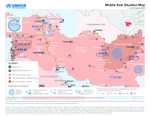
Middle East Situation - Population Movement Map 21 August 2026
Document
Escalating hostilities across Asia and the Middle East have led to a deterioration in the humanitarian situation. The affected areas already host over 31 million forcibly displaced people and recent r...
Publish date: 21 August 2026 (29 days ago)
Create date: 21 August 2026 (28 days ago)
UNHCR Middle East Situation: Emergency Update #22 as of 6 August 2026
DocumentCreate date: 9 August 2026 (1 month ago)
Middle East Situation - as of 19 May 2026
Document
Escalating hostilities across Asia and the Middle East have led to a deterioration in the humanitarian situation. The affected areas already host 24.3 million forcibly displaced people, many of whom, ...
Publish date: 19 May 2026 (4 months ago)
Create date: 19 May 2026 (3 months ago)
Middle East Situation - as of 12 May 2026
Document
Escalating hostilities across Asia and the Middle East have led to a deterioration in the humanitarian situation. The affected areas already host 24.3 million forcibly displaced people, many of whom, ...
Publish date: 12 May 2026 (4 months ago)
Create date: 12 May 2026 (4 months ago)
Middle East Situation - as of 2 May 2026
Document
Escalating hostilities across Asia and the Middle East have led to a deterioration in the humanitarian situation. The affected areas already host 24.3 million forcibly displaced people, many of whom, ...
Publish date: 5 May 2026 (4 months ago)
Create date: 5 May 2026 (4 months ago)
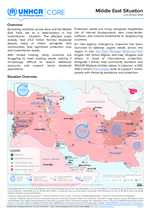
Middle East Situation - as of 29 April 2026
Document
Escalating hostilities across Asia and the Middle East have led to a deterioration in the humanitarian situation. The affected areas already host 24.3 million forcibly displaced people, many of whom, ...
Publish date: 30 April 2026 (4 months ago)
Create date: 30 April 2026 (4 months ago)
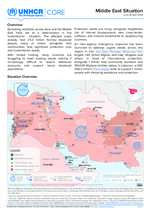
Middle East Situation - as of 26 April 2026
Document
Escalating hostilities across Asia and the Middle East have led to a deterioration in the humanitarian situation. The affected areas already host 24.3 million forcibly displaced people, many of whom, ...
Publish date: 27 April 2026 (4 months ago)
Create date: 27 April 2026 (4 months ago)
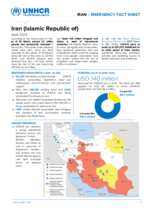
Iran (Islamic Republic of) - Emergency fact sheet April 2026
Document
Iran hosts 1.65 million refugees and others in need of international protection, the majority Afghans, many of whom, alongside host communities, face significant protection risks and humanitarian need...
Publish date: 13 May 2026 (4 months ago)
Create date: 13 May 2026 (4 months ago)
UNHCR Iran Protection Concerns Among Afghan Refugees in Iran - Helpline and Field Insights #2 May 2026
DocumentCreate date: 19 May 2026 (4 months ago)
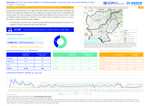
UNHCR-IOM Joint Border Monitoring Report # 10 on Inflows From The Islamic Republic of Iran 1 Mar - 11 Jun 2026
Document
UNHCR-IOM Joint Border Monitoring Report # 10 on Inflows From The Islamic Republic of Iran 1 Mar - 11 Jun 2026
Publish date: 19 June 2026 (3 months ago)
Create date: 19 June 2026 (3 months ago)
Protection Overview of Afghan Refugees in Iran - Key Protection Risks, Needs and Priorities amid Economic Pressure and Insecurity
Document
This analysis examines protection risks facing Afghan refugees and other Afghans in need of international protection in the Islamic Republic of Iran amid rising insecurity and economic pressure. Consu...
Publish date: 27 April 2026 (4 months ago)
Create date: 27 April 2026 (4 months ago)
Protection Concerns Among Afghan Refugees in Iran – Helpline and Field Insights in March 2026
Document
The findings in this report are based on interactions with over 4,170 Afghan refugees in Iran through the UNHCR Helpline between 1 and 31 March 2026. During this period, the helpline received 26,066 c...
Publish date: 15 April 2026 (5 months ago)
Create date: 15 April 2026 (5 months ago)
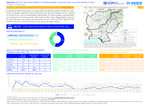
UNHCR-IOM JOINT BORDER MONITORING REPORT ON INFLOWS FROM THE ISLAMIC REPUBLIC OF IRAN 1 MAR - 9 APRIL 2026
Document
UNHCR-IOM JOINT BORDER MONITORING REPORT ON INFLOWS FROM THE ISLAMIC REPUBLIC OF IRAN 1 MAR - 9 APRIL 2026
Publish date: 14 April 2026 (5 months ago)
Create date: 14 April 2026 (5 months ago)
UNHCR Middle East Situation: Emergency Flash Update #14 as of 21 April 2026
DocumentCreate date: 21 April 2026 (4 months ago)
UNHCR Middle East Situation: Emergency Flash Update #13 as of 16 April 2026
DocumentCreate date: 16 April 2026 (5 months ago)
UNHCR Middle East Situation: Emergency Flash Update #12 as of 14 April 2026
DocumentCreate date: 14 April 2026 (5 months ago)
UNHCR Middle East Situation: Emergency Flash Update #11 as of 9 April 2026
DocumentCreate date: 9 April 2026 (5 months ago)
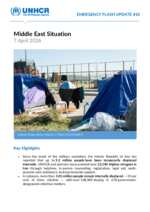
UNHCR Middle East Situation: Emergency Flash Update #10 as of 7 April 2026
DocumentCreate date: 7 April 2026 (5 months ago)
ANNEX: IA Funding Appeals & Protection Partners Presence - Escalation in Middle East - September 2026
Document
This document contains information related to protection partners, inter-agency funding appeals and gaps for contexts prioritized in the accompanying Inter-Agency Protection Advocacy Brief – Escalatio...
Publish date: 3 September 2026 (16 days ago)
Create date: 3 September 2026 (15 days ago)
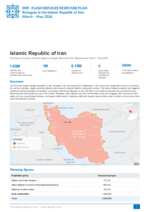
Iran RRP- Flash Refugee Response Plan
Document
Preliminary Summary and Inter-Agency Refugee Response Plan Requirements March–May 2026
Publish date: 26 March 2026 (5 months ago)
Create date: 25 March 2026 (5 months ago)
Middle East Situation - Population Movement Map 21 August 2026
Document
Escalating hostilities across Asia and the Middle East have led to a deterioration in the humanitarian situation. The affected areas already host over 31 million forcibly displaced people and recent r...
Publish date: 21 August 2026 (29 days ago)
Create date: 21 August 2026 (28 days ago)
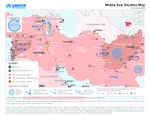
Middle East Situation - Population Movement Map 22 July 2026
Document
Escalating hostilities across Asia and the Middle East have led to a deterioration in the humanitarian situation. The affected areas already host over 31 million forcibly displaced people and recent r...
Publish date: 22 July 2026 (1 month ago)
Create date: 21 July 2026 (1 month ago)
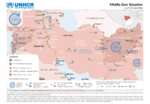
Middle East Situation - Population Movement Map 25 June 2026
Document
Escalating hostilities across Asia and the Middle East have led to a deterioration in the humanitarian situation. The affected areas already host over 31 million forcibly displaced people and recent r...
Publish date: 25 June 2026 (2 months ago)
Create date: 25 June 2026 (2 months ago)
Iran RRP- Flash Refugee Response Plan
Document
Preliminary Summary and Inter-Agency Refugee Response Plan Requirements March–May 2026
Publish date: 26 March 2026 (5 months ago)
Create date: 25 March 2026 (5 months ago)
Inter-Agency Refugee Protection Overview for the Middle East Situation
Document
The Inter-Agency Refugee Protection Overview for the Middle East Situation providing a cross-regional analysis of emerging protection risks and trends since the escalation of hostilities on 28 Februar...
Publish date: 17 June 2026 (3 months ago)
Create date: 17 June 2026 (3 months ago)
IA Protection Advocacy Brief - Escalation in the Middle East and Beyond, September 2026
Document
The Inter-Agency Protection Advocacy Brief: Escalation in the Middle East & Beyond provides a cross-regional protection analysis of the consequences of the escalation of hostilities since 28 February ...
Publish date: 3 September 2026 (16 days ago)
Create date: 3 September 2026 (15 days ago)
UNHCR Middle East Situation: Emergency Update #19 as of 2 June 2026
DocumentCreate date: 3 June 2026 (3 months ago)
UNHCR Middle East Situation: Emergency Update #18 as of 19 May 2026
DocumentCreate date: 20 May 2026 (3 months ago)
UNHCR Middle East Situation: Emergency Update #23 as of 9 September 2026
DocumentCreate date: 10 September 2026 (8 days ago)
UNHCR Middle East Situation: Emergency Update #22 as of 6 August 2026
DocumentCreate date: 9 August 2026 (1 month ago)
UNHCR Middle East Situation: Emergency Update #21 as of 7 July 2026
DocumentCreate date: 8 July 2026 (2 months ago)
UNHCR Middle East Situation: Emergency Update #20 as of 9 June 2026
DocumentCreate date: 10 June 2026 (3 months ago)
UNHCR Middle East Situation: Emergency Update #19 as of 2 June 2026
DocumentCreate date: 3 June 2026 (3 months ago)
UNHCR Iran Protection Concerns Among Afghan Refugees in Iran - Helpline and Field Insights #2 May 2026
DocumentCreate date: 19 May 2026 (4 months ago)
Middle East Situation - as of 19 May 2026
Document
Escalating hostilities across Asia and the Middle East have led to a deterioration in the humanitarian situation. The affected areas already host 24.3 million forcibly displaced people, many of whom, ...
Publish date: 19 May 2026 (4 months ago)
Create date: 19 May 2026 (3 months ago)
UNHCR Middle East Situation: Emergency Update #18 as of 19 May 2026
DocumentCreate date: 20 May 2026 (3 months ago)
UNHCR Middle East Situation: Emergency Update #20 as of 9 June 2026
DocumentCreate date: 10 June 2026 (3 months ago)
UNHCR Middle East Situation: Emergency Update #19 as of 2 June 2026
DocumentCreate date: 3 June 2026 (3 months ago)
UNHCR Middle East Situation: Emergency Update #18 as of 19 May 2026
DocumentCreate date: 20 May 2026 (3 months ago)
UNHCR Middle East Situation: Emergency Update #23 as of 9 September 2026
DocumentCreate date: 10 September 2026 (8 days ago)
UNHCR Middle East Situation: Emergency Update #22 as of 6 August 2026
DocumentCreate date: 9 August 2026 (1 month ago)
UNHCR Middle East Situation: Emergency Update #20 as of 9 June 2026
DocumentCreate date: 10 June 2026 (3 months ago)
UNHCR Middle East Situation: Emergency Update #19 as of 2 June 2026
DocumentCreate date: 3 June 2026 (3 months ago)
UNHCR Middle East Situation: Emergency Update #18 as of 19 May 2026
DocumentCreate date: 20 May 2026 (3 months ago)
UNHCR Middle East Situation: Emergency Update #23 as of 9 September 2026
DocumentCreate date: 10 September 2026 (8 days ago)
UNHCR Middle East Situation: Emergency Update #22 as of 6 August 2026
DocumentCreate date: 9 August 2026 (1 month ago)
-

Inter-Agency Refugee Protection Overview for the Middle East Situation
The Inter-Agency Refugee Protection Overview for the Middle East Situation providing a cross-regional analysis of emerging protection risks and trends since the escalation of hostilities on 28 Februar...Publish date: 17 June 2026
-
UNHCR Iran Protection Concerns Among Afghan Refugees in Iran - Helpline and Field Insights #2 May 2026
Publish date: 19 May 2026
-
Protection Overview of Afghan Refugees in Iran - Key Protection Risks, Needs and Priorities amid Economic Pressure and Insecurity
This analysis examines protection risks facing Afghan refugees and other Afghans in need of international protection in the Islamic Republic of Iran amid rising insecurity and economic pressure. Consu...Publish date: 27 April 2026
-
Iran RRP- Flash Refugee Response Plan
Preliminary Summary and Inter-Agency Refugee Response Plan Requirements March–May 2026Publish date: 26 March 2026